Introduction
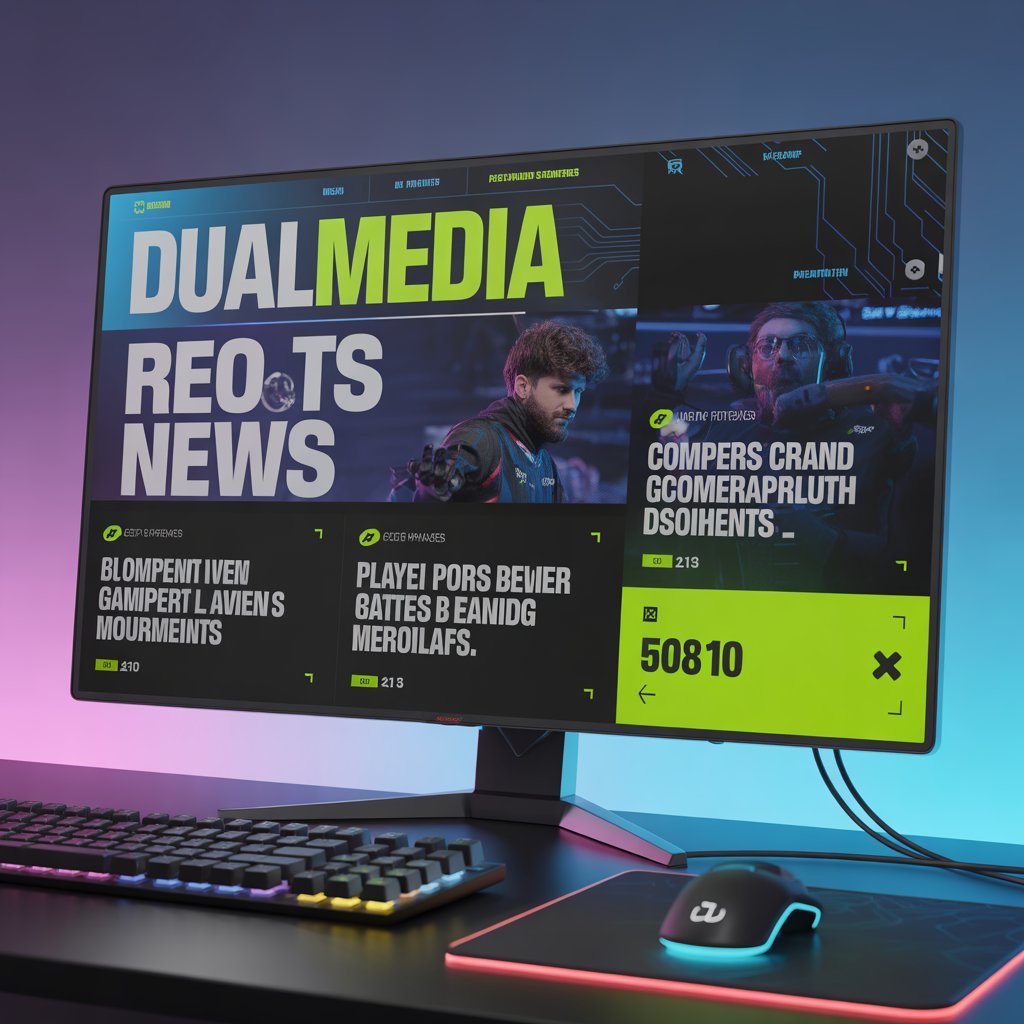
You know that feeling when a major esports tournament ends, and everyone is talking about a moment you completely missed? Maybe it was a controversial referee call, a player’s cryptic tweet, or a roster leak that broke an hour before the official announcement. It is frustrating to feel like you are always one step behind. In the fast paced world of competitive gaming, waiting for traditional sports networks to summarize the action just does not cut it anymore. That is where the concept of esports news dualmedia comes into play, bridging the gap between raw community chatter and professional journalism.
This isn’t just about getting news faster. It is about understanding the story behind the scoreboard. In this article, we are going to explore how this hybrid approach to coverage is reshaping the way you consume your favorite games. We will look at how traditional media is finally adapting to the chaotic energy of live streaming, and how you can use this shift to stay ahead of the meta, both in game and in conversation. Whether you follow League of Legends, Valorant, or CS2, understanding this new landscape will change how you watch.
What Exactly Is Esports News Dualmedia?
Let’s break this down because the term might sound like corporate jargon, but the reality is actually pretty simple. Traditionally, you had two separate worlds. On one side, you had the “first screen”: the live streams on Twitch or YouTube where players and personalities broadcast raw, unfiltered content. On the other side, you had the “second screen”: the articles written by journalists after the fact, summarizing what happened.
Esports news dualmedia is the merging of these two lanes. It is the idea that the news is no longer just written after the event; it is created during the event, using the same tools as the creators. It is the writer who clips a highlight mid match and posts it with analysis before the game is even over. It is the podcast host who interviews a player while they are still in their gaming chair, with the crowd noise buzzing in the background.
The Core Elements of This Approach
-
Real Time Analysis: Coverage happens in the moment, not the morning after.
-
Platform Agnostic: It lives on X (formerly Twitter), YouTube, podcasts, and long form articles simultaneously.
-
Community Driven: It treats the audience as participants, not just readers.
I remember covering a Major tournament a few years back where the biggest story wasn’t the final score. It was a three second clip of a player smirking after a controversial pause. The traditional recap article came out six hours later. But the esports news dualmedia ecosystem—a combination of a streamer’s live reaction and a journalist’s quick thread on X—had already told the full story, complete with context, within ten minutes. That is the power of this hybrid model.
Why Traditional Coverage Is No Longer Enough
If you have been following esports for a while, you might remember the days when you waited for a YouTube upload or a long form article to get the post match breakdown. Those formats have their place. They offer depth and nuance. But they lack urgency.
The modern esports fan has a short attention span, but it is not because they are lazy. It is because the volume of content is overwhelming. By the time a traditional article goes live, you have already seen the clip on TikTok. You have already read the player’s angry tweet. You have already watched your favorite streamer react to it.
Traditional media often treats esports like traditional sports. They wait for the press conference. They wait for the official statement. But in gaming, the news breaks on Discord servers. It breaks on anonymous burner accounts. Esports news dualmedia acknowledges this reality. It doesn’t ignore the rumor mill; it gives you the tools to verify it.
The Speed vs. Accuracy Dilemma
One of the biggest challenges in this space is balancing speed with accuracy. When you are trying to be first, mistakes happen.
-
The Risk: False roster rumors spread like wildfire.
-
The Reward: When done right, dualmedia coverage provides a “living” article that updates in real time, marking rumors as unconfirmed until the facts come in.
How Dualmedia Changes the Viewing Experience
Let’s talk about how this actually affects you when you sit down to watch a match. Imagine it is Sunday, and the Grand Finals are on. In the old model, you would watch the stream, maybe glance at a live blog for scores, and then wait for the recap.
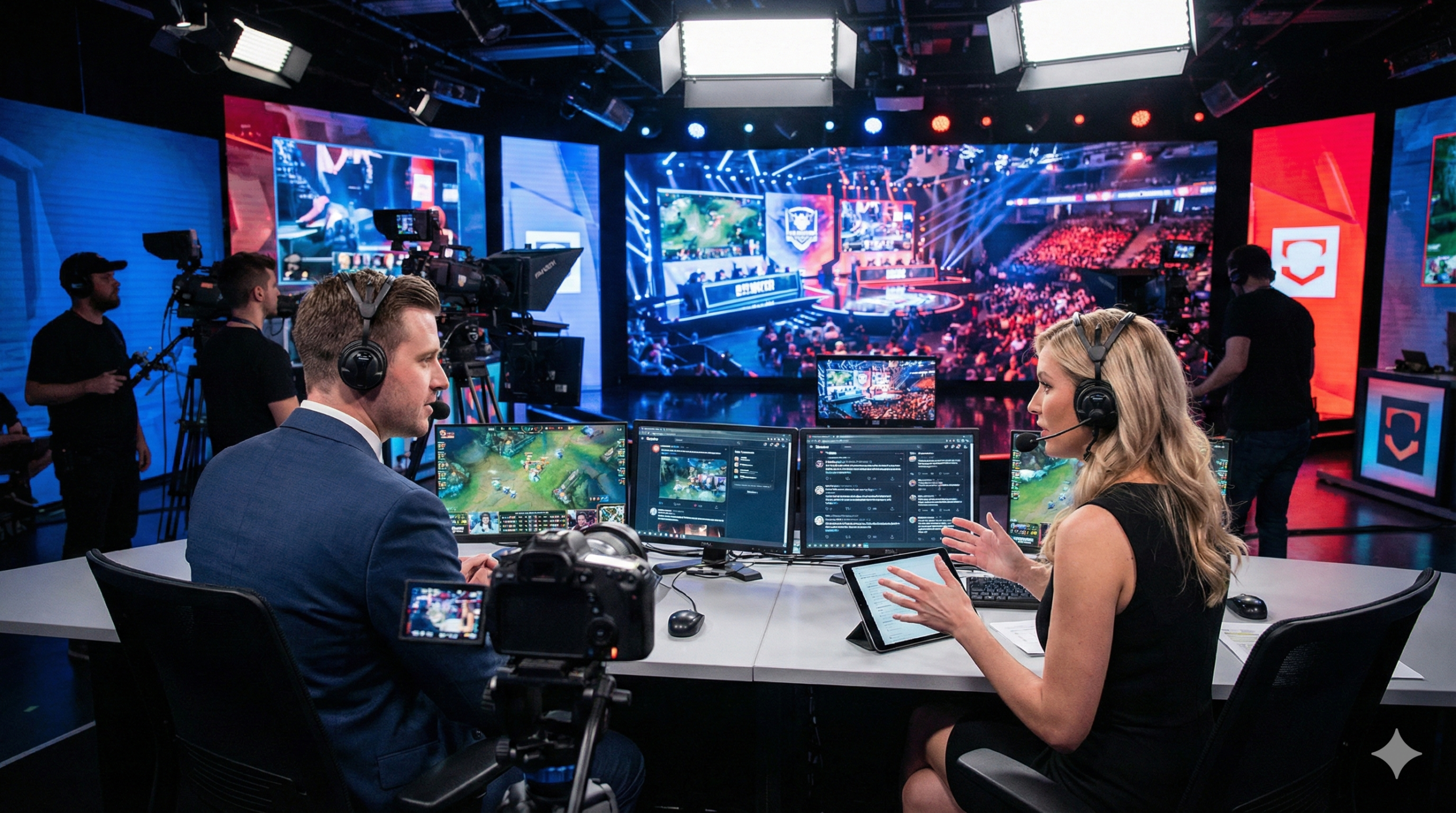
With a dualmedia approach, your experience is layered. You are watching the broadcast, but you also have a trusted journalist or analyst open on your second monitor. They are not just repeating what the main casters are saying. They are offering inside information. They are texting sources inside the team about why that unusual draft pick just happened. They are pulling up historical stats that the broadcast overlay isn’t showing.
This creates a “director’s commentary” experience for the viewer. It makes you feel smarter about what you are watching. You aren’t just a spectator; you are an informed insider.
The Role of the Hybrid Creator
We are now seeing a rise in personalities who refuse to be categorized as just “streamers” or just “journalists.” These are the true drivers of esports news dualmedia.
-
They host podcasts where they break news, not just react to it.
-
They go live on YouTube immediately after a match to analyze replays frame by frame.
-
They write in depth pieces that link back to their video essays, creating a closed loop of content.
This is a win for you. Instead of having to follow ten different accounts to get the full picture, these hybrid creators serve as curators. They do the heavy lifting of verifying the leaks and then present them in an engaging, easy to digest format.
The Good: Transparency and Access
So, what are the benefits of this shift? Why should you embrace the dualmedia model? The biggest advantage is transparency.
In the past, esports organizations could control their narrative. If a player was benched, they would put out a polished statement thanking them for their time. The fans would be left guessing about the drama behind the scenes. Now, dualmedia coverage pulls back the curtain.
-
Player Voices: Players now often break their own news on stream before organizations can issue a press release.
-
Financial Insight: We are seeing more coverage about salary disputes and contract lengths, topics that used to be taboo.
-
Accountability: When a tournament organizer makes a bad call, the coverage is immediate and relentless, forcing them to respond faster.
I personally find this level of access to be thrilling. It used to feel like esports pros were celebrities on a pedestal. Now, because of the raw nature of live streaming and immediate reporting, they feel more like relatable competitors. You see the frustration, the exhaustion, and the joy in real time. It makes the emotional stakes of a tournament much higher when you understand the human element involved.
The Bad: Burnout, Misinformation, and Toxicity
Of course, it is not all sunshine and highlight reels. The esports news dualmedia model has a dark side, and it is important to acknowledge it. The demand for 24/7 content creates immense pressure on the people creating it.
Creator Burnout
The line between work and life disappears for journalists and streamers in this space. If you are a journalist trying to compete with live streams, you can never truly log off. There is always a tournament happening somewhere in the world. There is always a rumor brewing. This constant “on” state leads to burnout, which in turn leads to sloppy reporting.
The Misinformation Machine
Because speed is rewarded over accuracy, we see a lot of “journalism” that is simply repackaging Reddit rumors.
-
Echo Chambers: Sometimes, a fake leak gets repeated by so many “insiders” that it becomes accepted as fact before it is debunked.
-
Bad Actors: There are accounts that thrive on stirring up drama just for engagement, with no regard for the careers or mental health of the players involved.
Toxicity
When news breaks fast, the reactions are equally fast. If a player has a bad game, the hot takes and hate raids start before the player has even left the stage. The dualmedia environment amplifies this. It turns every micro moment into a potential controversy.
For you, the reader, navigating this means you have to be picky about who you trust. Not all sources are created equal. Just because a clip is viral does not mean it tells the whole story.
How to Find Reliable Dualmedia Sources
With so much noise out there, how do you filter out the nonsense? Over the years, I have developed a few rules of thumb for finding quality coverage that respects your time and intelligence.
1. Look for Track Records
Anyone can claim to have “insider sources.” But the journalists and creators who have been doing this for years have a history. If they were wrong about a major roster move last year, they probably have a credibility issue. Look for people who admit when they were wrong. Transparency about mistakes is a huge green flag in this industry.
2. Separate Opinion from Reporting
There is a difference between a streamer giving their hot take (entertainment) and a reporter verifying a contract signing (journalism). The best esports news dualmedia sources clearly label which is which. If a creator is blurring the lines to make rumors sound like facts, that is a red flag.
3. Follow the Money
This sounds cynical, but it is practical. Who pays the bills?
-
Independent creators rely on subscriptions and donations; they often have less corporate pressure but also less fact checking infrastructure.
-
Large media outlets have legal teams and editorial oversight but move slower.
A healthy dualmedia diet usually involves mixing both.
The Impact on Esports Organizations
How are the teams and leagues reacting to this shift? For the most part, they are adapting, though sometimes reluctantly. In the early days of esports, organizations saw media as a marketing tool. They wanted fluff pieces. They wanted hype.
Now, because of the dualmedia landscape, they are realizing that control is an illusion. The story is going to get out anyway. Progressive organizations are leaning into this. They are partnering with hybrid creators to give “fly on the wall” access. They are allowing players to stream scrims (to an extent) or vlog their tournament experiences.
This benefits the fan. When organizations stop trying to gatekeep the narrative and start embracing transparency, the content becomes infinitely more interesting. You get to see the grind, the strategy meetings, and the genuine friendships—or rivalries—that define a team.
Case Study: The Roster Leak Era
Roster leaks used to be a scandal. Now, they are practically a marketing strategy. Often, the “leak” is part of the dualmedia machine. A trusted insider drops a hint. The community speculates for days. Finally, the team releases a cinematic trailer. The speculation window builds more hype than a simple press release ever could. It turns news into an event.
The Future: AI, Authenticity, and Community
Looking ahead, where is esports news dualmedia headed? The next few years are going to be fascinating, largely driven by technology and shifting audience expectations.
Artificial Intelligence
AI is already being used to summarize matches and generate highlights. Soon, we may see AI powered news bots that scrape Discord, X, and official statements to give you a personalized news feed tailored to your favorite games. However, there is a risk here. If AI replaces the human voice, we lose the nuance. I would argue that as AI content becomes more prevalent, the value of human analysis—the hot take, the emotional reaction, the experienced eye—will actually increase. People will pay a premium for authenticity.
Decentralized Communities
We are also seeing a move away from centralized platforms. Discord servers and Substack newsletters are becoming the new frontier for dualmedia. Instead of shouting into the void of an algorithm, creators are building direct relationships with their most dedicated fans. This allows for deeper discussions. You aren’t just reading a comment; you are in a server talking about the match with the reporter who wrote the article.
The Rise of Women’s Esports Coverage
Another positive trend is the increased coverage of women’s leagues and underrepresented communities. Dualmedia allows niche communities to build their own coverage ecosystems. When mainstream outlets ignore a tournament, independent creators step in to stream, cast, and report. This grassroots approach ensures that stories get told, even if the traditional algorithm doesn’t prioritize them.
Personal Tips for Navigating the Noise
If you take one thing away from this article, let it be this: you are in control of your feed. You do not have to follow every journalist or every player. Curating your information sources is a skill.
Here is my personal strategy for staying informed without burning out:
-
Pick Three: Find one trusted reporter for breaking news, one analyst for deep dives, and one entertaining streamer for vibes. That is usually enough to cover 90% of what matters.
-
Use Aggregators: Don’t chase news across ten different apps. Use a Reddit multireddit or a dedicated Discord bot that aggregates headlines.
-
Value Silence: If a rumor seems too juicy to be true, wait an hour before sharing it. The “first” reaction is often the wrong reaction.
The goal of esports news dualmedia is to enrich your experience, not to overwhelm you. When used correctly, it transforms a passive viewing experience into an active, engaging community activity.
Frequently Asked Questions (FAQs)
1. What is esports news dualmedia?
It is a hybrid approach to esports journalism that combines live streaming, social media updates, and traditional long form reporting. It focuses on delivering news in real time while providing the depth and context of professional writing.
2. How is dualmedia different from traditional esports journalism?
Traditional journalism typically reports after an event with a focus on polish and verification. Dualmedia reports during the event, using clips, tweets, and live analysis to break stories as they happen, often involving the community in the conversation.
3. Is esports news dualmedia reliable?
It depends on the source. While it offers faster access to information, it is more susceptible to rumors. You should follow established journalists with a proven track record who are transparent about when a story is confirmed versus when it is a rumor.
4. Why do esports players break their own news on stream?
Players often break their own news to control the narrative and connect directly with fans. It also allows them to bypass traditional media filters, ensuring their message is not taken out of context.
5. How can I avoid misinformation in esports?
Stick to a few trusted sources. Be wary of anonymous burner accounts with no history. If a story is only posted by one source and no one else is verifying it, treat it with skepticism until it is confirmed by a reputable outlet.
6. What are the best platforms for esports news dualmedia?
X (Twitter) is the primary hub for breaking news. YouTube and Twitch are used for live analysis and podcasts. Discord servers often host exclusive communities where deeper discussions happen.
7. Is dualmedia coverage free to access?
Much of it is free, especially content on social media and streaming platforms. However, many high quality journalists and creators are moving to subscription models (like Patreon or Substack) to fund their work without relying on ads.
8. How does dualmedia affect the mental health of players?
It can be a double edged sword. It allows players to build personal brands, but it also exposes them to immediate backlash and toxic comments after a poor performance. The constant scrutiny is a significant challenge for pros.
Conclusion
The way we consume esports is evolving faster than the games themselves. The days of waiting for a polished, slow moving press release are fading. In its place, we have a dynamic, sometimes chaotic, but ultimately more honest ecosystem. Esports news dualmedia represents the best of both worlds: the speed and authenticity of live streaming combined with the context and accountability of traditional journalism.
We are seeing a new generation of creators who understand that fans don’t just want scores; they want stories, context, and connection. Whether you are a casual viewer who just wants to know why your favorite player got benched, or a hardcore fan who analyzes draft phases, this hybrid model gives you the tools to go deeper.
It is an exciting time to be a fan. The barriers between you and the pros are lower than ever. But with great access comes great responsibility. It is up to you to support the creators who do the work ethically and to ignore the ones who prioritize drama over truth.
What has been your experience with esports coverage? Do you prefer the fast paced chaos of live reactions, or the deep dives that come out days later? I would love to hear your take in the comments or on social media. And if you found this guide helpful, share it with a friend who is always asking you “Wait, what happened after the match?”